
St. Louis City Criminal History Checks
No one portal contains a complete St. Louis City criminal record. Start with the source tied to the question. Missouri Case.net shows cases filed in the 22nd Judicial Circuit. The City inmate locator addresses current local custody, while Missouri DOC Offender Search covers state prison and community supervision. MACHS provides the state repository response. Police and incident reports must come from SLMPD or another agency that made the report. Older or non-electronic court files may require help from the Circuit Clerk.
A careful record search uses a full legal name, date of birth when the form permits it, prior names, and a known case or booking number. Common names can produce possible matches. Spelling variants also matter. Use this order to keep each result in context:
- Search Missouri Case.net and choose “City of St. Louis – 22nd Judicial Circuit,” not St. Louis County.
- Check the City inmate locator for current custody, then use the CJC phone channel if a very recent intake has not appeared.
- Use Missouri DOC Offender Search when the person may be in state prison, on probation, on parole, or on conditional release.
- Order a MACHS name check for open statewide repository data, or use fingerprints to review one’s own identity-confirmed state record.
- Request the underlying police, booking, or court document from the office that created it, and compare its identifiers and outcome.
Each channel has limits. Case.net does not prove that every arrest led to a case. The jail locator can lose a person from view after release or transfer. A public MACHS name result is a possible identity match. The resulting trail becomes much clearer when the same date, agency, case number, and disposition line up across sources.
For a view of the state repository interface, see the official MACHS Name Search.
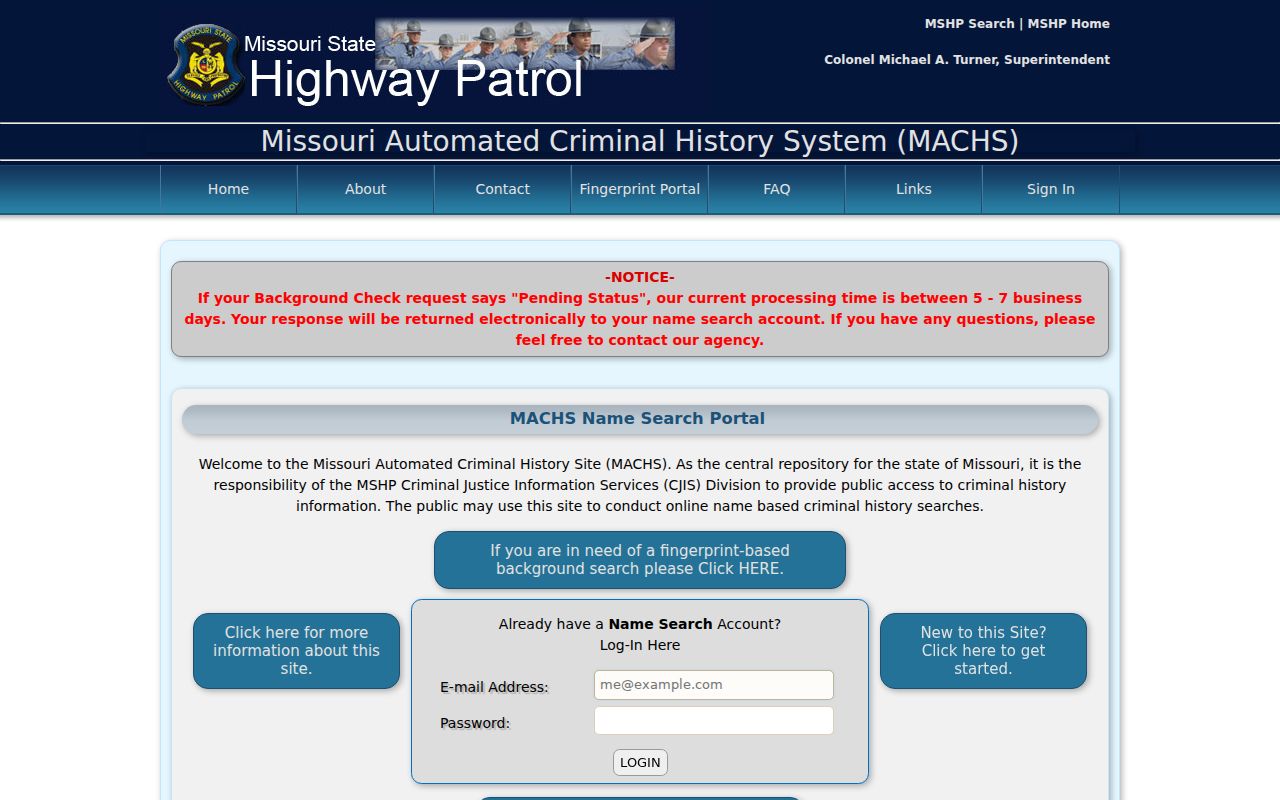
The screen is the entry point for an open-record name check, not a substitute for fingerprint identification or a court file.
St. Louis City Record Boundaries
St. Louis is an independent city with county-equivalent functions. It is not located inside St. Louis County. The separation dates to the 1876 “Great Divorce,” and the distinction still controls criminal record searches. A City arrest, municipal case, or state prosecution belongs under the City of St. Louis jurisdiction. Selecting St. Louis County points to the surrounding county and its separate courts, police departments, jail, and records.
The City performs judicial and revenue work that counties usually handle. That explains the unusual mix of offices: the 22nd Judicial Circuit keeps state criminal cases, its Municipal Division handles City ordinance matters, the City Division of Corrections runs the City Justice Center, and SLMPD retains its own incident and arrest reports. The Sheriff mainly handles court security, process, prisoner transport, and related court duties. It is not a universal criminal-records office.
The official City government structure describes this county-equivalent arrangement. That boundary rule should be checked before comparing any City statistic, portal result, or agency response.
| Record sought | Primary City or state channel | What it establishes |
|---|---|---|
| Filed criminal case | 22nd Judicial Circuit and Case.net | Charges, docket events, hearings, outcomes, and sentences |
| Incident or arrest report | SLMPD or creating agency | Allegations, event facts, probable cause, and agency report data |
| Current City custody | Division of Corrections | Current booking, hold, bond, and custody details |
| Missouri history | MSHP CJIS through MACHS | Open repository information or authorized fingerprint results |
| State supervision | Missouri DOC | Prison, probation, parole, or conditional-release status |
Note: “St. Louis County” and “St. Louis City” are not interchangeable labels in an official record search.
Official Background Checks in Missouri
The Missouri State Highway Patrol Criminal Justice Information Services Division runs the Central Repository and its Missouri Automated Criminal History Site, known as MACHS. A public name check costs $15 plus the state payment fee. It searches a name, date of birth, and optional Social Security number. The response can include convictions, arrests less than 30 days old, prosecutor-filed charges awaiting disposition, and suspended imposition of sentence entries during probation. Closed Missouri records and FBI records are outside that public name product.
Name checks are useful, but they return possible matches. For one’s own identity-confirmed Missouri review, fingerprints are the stronger route. The MACHS Fingerprint Search Portal registers the request and routes capture through IDEMIA/IdentoGO. A person can also send form SHP-158 with an FD-258 fingerprint card. Published state pricing lists $20 for a Missouri fingerprint search and $12 for IDEMIA service. A notarized response adds $5. Authorized FBI components have separate rates and eligibility rules.
The official fingerprint portal shows how St. Louis City residents begin electronic capture through MACHS Fingerprint Search.
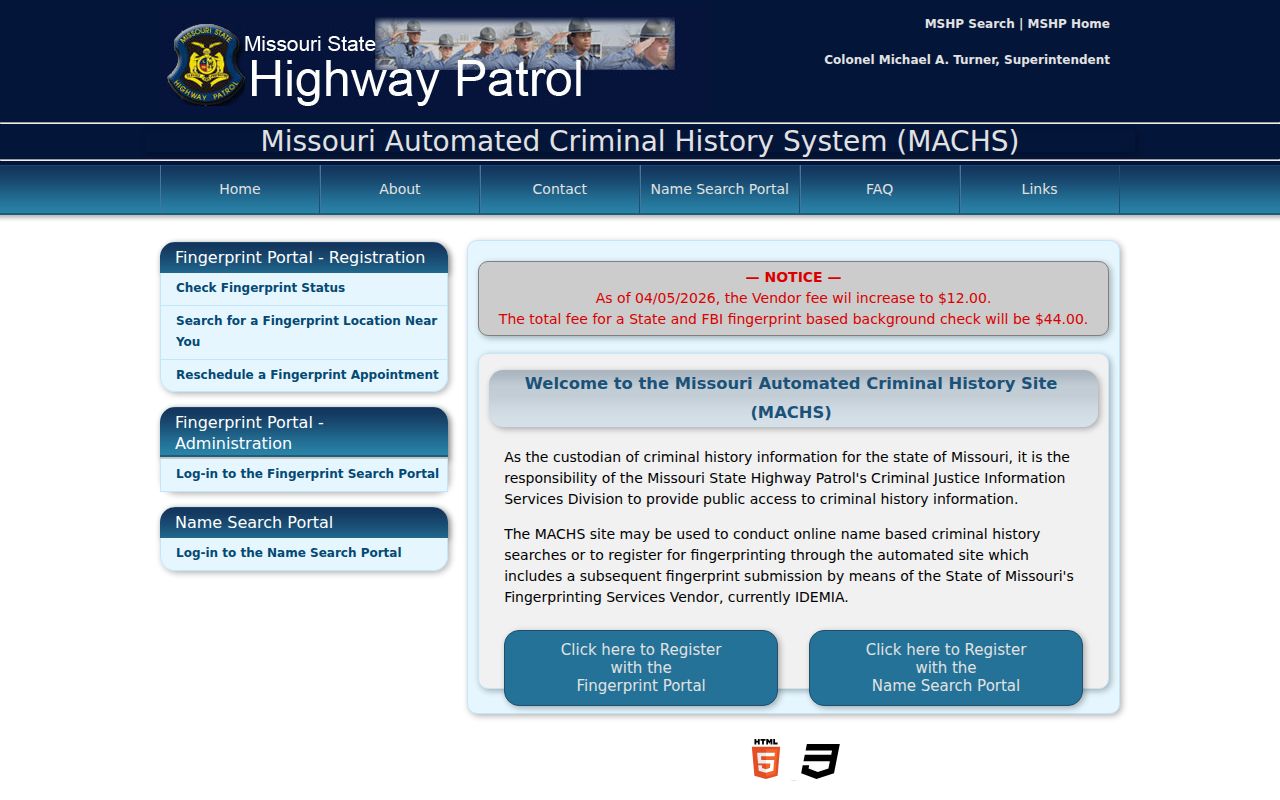
Fingerprints link the response to identity, while IDEMIA only captures and transmits prints and does not decide what appears in the record.
St. Louis City MACHS Record Review
MACHS name searches require accurate input. The fee is nonrefundable once a search is submitted, and wrong data can yield the wrong possible matches. Most electronic responses are immediate, though MSHP says some need research and can take 10 to 14 business days. The Central Repository updates daily. Review the search data before payment, then compare each returned event with the arresting agency and court disposition.
| MACHS field | Use | Search note |
|---|---|---|
| Last and first name | Required identity inputs | Use the legal spelling |
| Middle name | Narrows common-name results | Enter when known |
| Date of birth | Required identity input | Check month, day, and year |
| Social Security number | Optional match aid | Use only through the official portal |
| Notarized letter | Optional certified response feature | Adds the published $5 fee |
If the response appears to belong to another person, use the official SHP-186 identity challenge. That process relies on fingerprints rather than a guess based on a shared name. When the event belongs to the requester but its outcome is wrong or missing, contact the contributing agency or court and send CJIS the event identifiers and disposition proof. A Case.net printout alone is not a full statewide rap sheet.
Kinds of Criminal Records
St. Louis City criminal records reflect distinct steps in a case. SLMPD or another arresting agency writes the incident and arrest report. Corrections creates the booking file at the City Justice Center. The Circuit Attorney decides whether to file state charges, while the City Counselor handles ordinance prosecutions. The Circuit Clerk then keeps filed court material. MSHP groups reportable arrest cycles and later outcomes in the Central Repository.
- Incident and arrest reports describe allegations, officers, locations, cited offenses, people, and property.
- Booking records cover intake, master number, holds, bond, housing, property, and release events.
- Court case files show filed counts, hearings, motions, pleas, judgments, and sentences.
- Warrant records originate with a court, though a public docket event may not confirm current status.
- Corrections records separate City detention from state prison, probation, parole, and conditional release.
- Registry records publish only the fields Missouri law authorizes for public safety use.
Juvenile records are handled through the Family Court/Juvenile Division and are generally confidential. Closed and expunged records are restricted by law rather than assumed to be physically erased from every system. For more detail on filed charges and judicial outcomes, use the St. Louis City Court Case Lookup.
Three St. Louis City Record Systems
MACHS, Case.net, and the City Justice Center locator often appear in the same search, but they do not measure the same event. MACHS is an identity and arrest-cycle repository. Case.net is a court docket. The City locator is a current-custody tool. A person may appear in one and not another for sound reasons, such as release before a court filing, a transfer to state custody, a charge that was never filed, or an older paper case that has limited online detail.
The City Justice Center opened in 2002 and has a published capacity of 860. Its locator searches people held by the City Division of Corrections. If the intake is very recent, the CJC operator at 314-621-5848 is the fallback. A person who has moved into state custody or supervision should be checked in Missouri DOC Offender Search instead.
The official Missouri DOC Offender Search shows the state-level corrections channel.
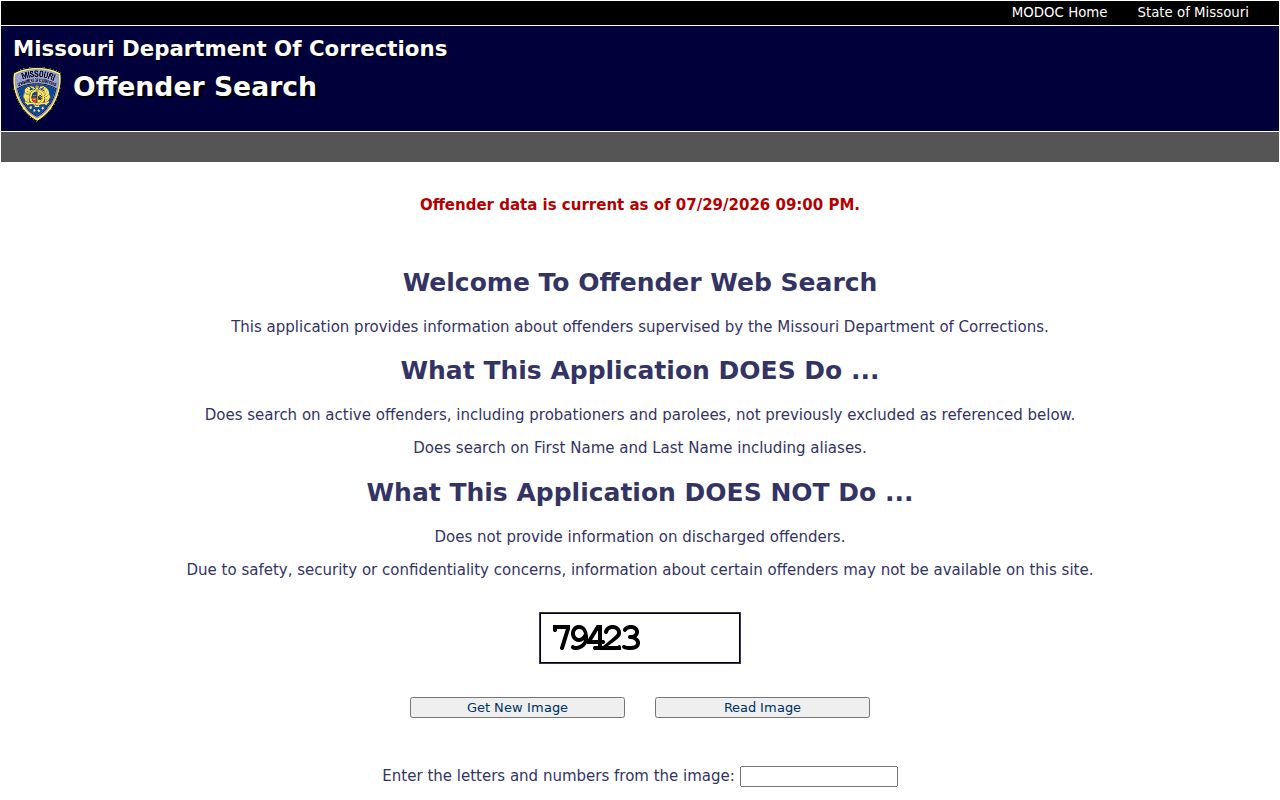
This locator complements City custody records; it does not replace a CJC booking file or a 22nd Judicial Circuit docket.
- Arrest
- A custody event based on a warrant or probable cause, not a finding of guilt.
- Charge
- An offense formally filed by a prosecutor in court; it may differ from the booking allegation.
- Disposition
- The result for a charge, such as conviction, acquittal, dismissal, or nolle prosequi.
- SIS
- A suspended imposition of sentence, where sentence is withheld during probation; it is not expungement.
St. Louis City Criminal Records: What They Contain
A Missouri rap sheet is centered on identity and events. It can carry names and aliases, demographic identifiers, state and FBI numbers where present, fingerprints, and arrest cycles. Each cycle can show the arrest date, agency, Offense Cycle Number, arrest allegations, prosecutor tracking, court outcome, sentence, custody, and supervision. Public access depends on the product and whether the record is open.
Case.net organizes information around a court case instead. It may show the case number, filing date and location, parties, each charge count, statute and level, docket entries, hearings, judgment, sentence, and public financial entries. Electronic documents appear only when remote access is allowed. A CJC booking file instead emphasizes intake, release, holds, bond, housing, and property.
| Name and identifiers | Legal name, aliases, date of birth, and identifying numbers where law permits release |
|---|---|
| Arrest and booking | Agency, date, report or master number, initial allegations, holds, bond, and release |
| Charges and statutes | Filed count, offense description, Missouri citation, and felony, misdemeanor, or ordinance level |
| Disposition | Count-level outcome and date, which may differ across charges in the same case |
| Sentence | Custody, fine, probation, restitution, or other court-ordered result |
| Supervision status | Probation, parole, conditional release, or state custody when publicly available |
St. Louis City Arrest Cycle Records
The Offense Cycle Number, or OCN, is an eight-digit Missouri tracking identifier. A reportable custodial arrest receives an OCN through the fingerprint submission. That number helps the Central Repository join the arrest to later prosecutor action, court disposition, sentence, and custody or supervision information. It is one reason fingerprint records can distinguish events and people more reliably than a name search.
The flow is: Arresting agency report → CJC booking and fingerprints → OCN submission to MSHP CJIS → prosecutor filing decision → 22nd Judicial Circuit case → disposition and sentence reported back to CJIS. Breaks can occur. An agency may lack a final disposition, an older case may remain on paper, or aliases may split possible matches. Compare the event date, agency, OCN, case number, and count-level outcome before concluding that two entries describe the same matter.
A dismissal does not automatically erase the incident or booking record. Likewise, the word “disposed” on Case.net only means the court finished that count or case. It does not always mean convicted. The specific disposition field controls.
Missouri Public Access Laws
Missouri law opens many government records while preserving limits for active investigations, juveniles, victims, sealed matters, medical information, and personal identifiers. The correct custodian still matters. SLMPD reports go through the City process, Corrections handles booking and custody material, the Circuit Clerk holds judicial files, MSHP controls repository records, and DOC holds state custody and supervision information.
Key statutes and rules:
§610.011 RSMo directs courts to read the Sunshine Law toward openness and its exceptions narrowly.
§610.023 RSMo requires a response by the end of the third business day and an explanation when production takes longer.
§610.100 RSMo governs arrest and investigative reports, including basic arrest information and closure rules.
§43.507 RSMo authorizes criminal-history dissemination through the Central Repository.
Missouri Court Operating Rule 2 controls public, confidential, and redacted court records.
§610.140 RSMo creates the petition process for expungement.
An open arrest report is not proof of guilt. Court files also follow judicial access rules rather than every executive-agency request rule. This division is why requests should name the exact record component and office instead of asking one department for “everything.”
St. Louis City GOVQA Requests
The City Counselor’s GOVQA system is the broad fallback for City and SLMPD records that are not already online. First check Open Data and the Public Records Archive. Then choose the relevant department group, create or use an account, describe the record, and track messages, estimates, payments, and released files. A precise request identifies the agency, report or booking number when known, date range, record type, and preferred electronic format.
The three-business-day rule is a response deadline, not a promise of completed delivery in three days. When immediate access is unavailable, the custodian must explain the delay and state the earliest time and date the record should be ready. Missouri law permits actual research and duplication costs, so ask for an estimate before broad searches. Court files may follow clerk and judiciary fee rules instead.
The official St. Louis GOVQA portal shows the request and archive entry point.
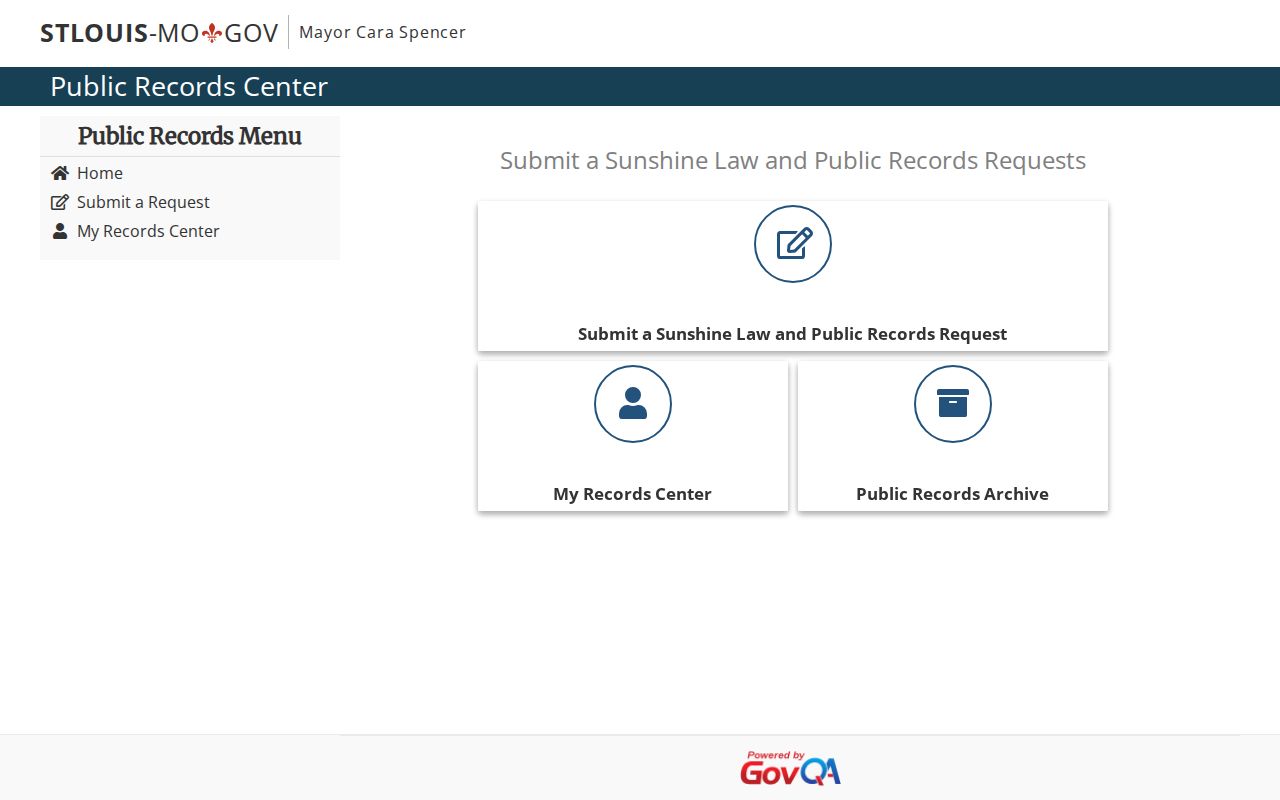
The portal can route City records, but it cannot turn one department into the custodian of court, repository, federal, or DOC files.
Circuit Clerk
10 N. Tucker Blvd.
St. Louis, MO 63101
314-622-4433
Weekdays, 8:30 a.m.–5 p.m.
SLMPD Records Service Center
1915 Olive St., first floor
St. Louis, MO 63103
314-444-5551
Weekdays, 8 a.m.–4 p.m.
City Justice Center
200 S. Tucker Blvd.
St. Louis, MO 63102
314-621-5848
Open 24 hours
Restricted, Sealed & Expunged Records
Missouri expungement under §610.140 closes qualifying records held by courts, repositories, and agencies. It does not promise that every old reference vanishes from every independent publication. For a St. Louis City event, a petition generally belongs in the 22nd Judicial Circuit. The petition must list each offense and each agency that may possess a record so those custodians can receive notice and implement an order.
Eligibility depends on the current statute. Serious violent, dangerous, sexual, intoxication-related driving, and other listed offenses are excluded. General waiting periods are three years after completion for a felony and one year for a misdemeanor or ordinance violation, subject to all statutory conditions. Pending charges, unsatisfied obligations, lifetime limits, and public-safety findings can affect the result. The exact current City filing fee was not confirmed in the official research, so it should be checked with the Circuit Clerk.
Start with one’s own Case.net entries and MACHS record. Identify every case, arresting agency, disposition, and completion date. Read §610.140 for each count, use the current Missouri judiciary petition form, and verify later updates with a new personal review. Under §610.120 RSMo, “closed” does not mean destroyed. Courts, criminal-justice agencies, and other bodies authorized by law can retain access. An SIS is also not the same as expungement.
St. Louis City Corrections Records
Local detention and state supervision are separate layers. The Division of Corrections operates CJC for City custody. Missouri DOC handles prison sentences, probation, parole, and conditional release. District EP serves St. Louis City and St. Louis County with about 31 officers, around 45 clients per officer, and roughly 1,395 cases each year. Its work includes interstate cases, felony and misdemeanor probation, Parole Board cases, domestic violence, severe mental illness, and lifetime or sex-offender supervision.
Search the DOC locator first for a public status. Check Case.net for a probation sentence or violation motion. If those sources are not enough, contact the assigned field office. DOC asks for a full name and, when available, an offender number, date of birth, or Social Security number. Officer notes, assessments, and detailed supervision conditions are not automatically open.
The official District EP profile places the local community-supervision office in context.
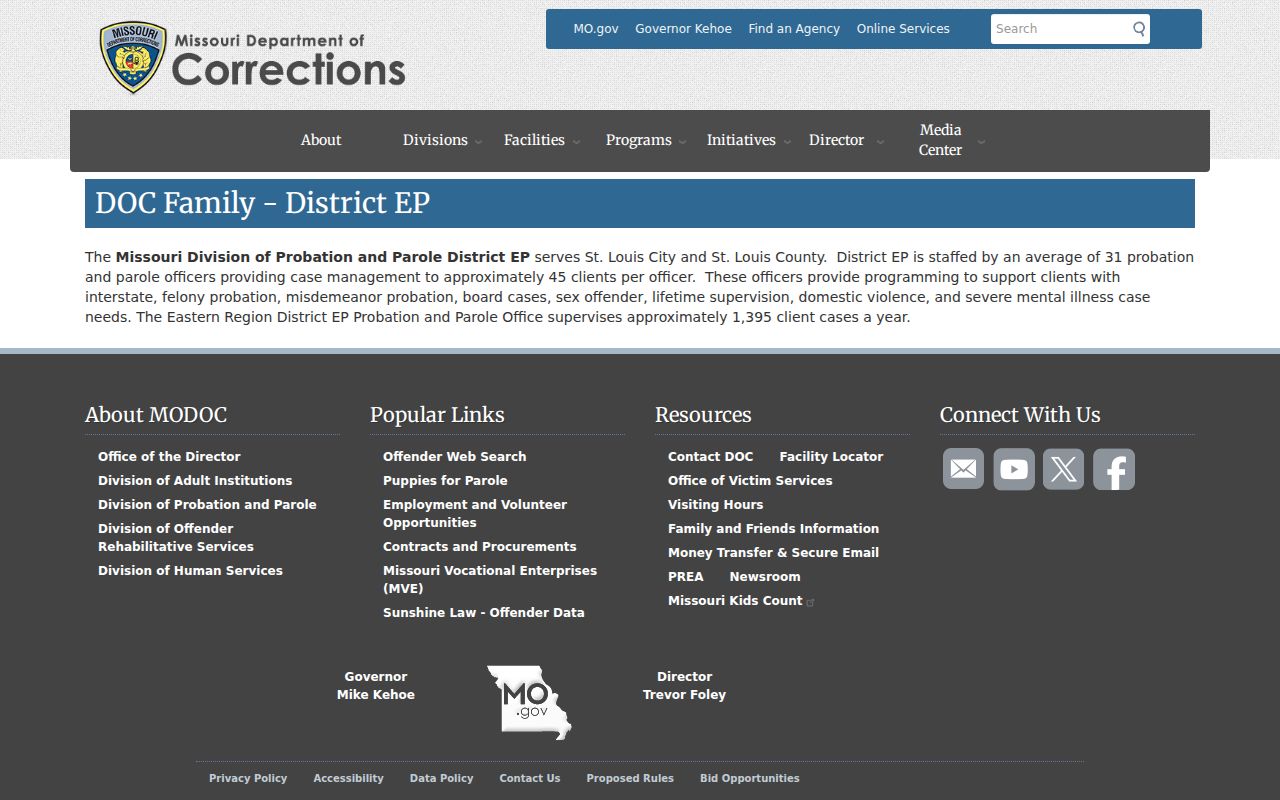
The district profile identifies local supervision work, while Case.net and DOC search results supply the public case and status layers.
St. Louis City Warrant Records
No verified comprehensive public City or SLMPD active-warrant database was found. Case.net can display a warrant event in a filed case, but the entry does not guarantee that the warrant remains executable. Municipal bench warrants may follow a missed appearance or failure to comply in a City ordinance case. State-case warrants belong to the 22nd Circuit. Sealed warrants, indictments, and juvenile matters will not be available in a public name search.
Use a cautious fallback chain. Search the exact City jurisdiction in Case.net. Contact Municipal Court at 314-622-3231 for an ordinance case or the Circuit Clerk for a state case. GOVQA may help with releasable historical material, but it is not real-time clearance. A person who believes an active warrant exists should seek legal advice before appearing to resolve it.
Police incident records follow a different path. SLMPD’s Records Service Center offers City-only local checks for $4.50 and City-and-County checks for $9, plus incident and crash requests for eligible parties. Non-involved requesters use Sunshine review. The form says not to mail payment; the agency gives payment instructions.
St. Louis City Federal Records
Federal cases in St. Louis do not appear in Missouri Case.net. The Eastern Division of the U.S. District Court for the Eastern District of Missouri sits at the Thomas F. Eagleton U.S. Courthouse. PACER provides federal dockets and filed documents after registration. Federal custody is also separate from CJC and Missouri DOC custody.
The Eastern District of Missouri site is the official court gateway.
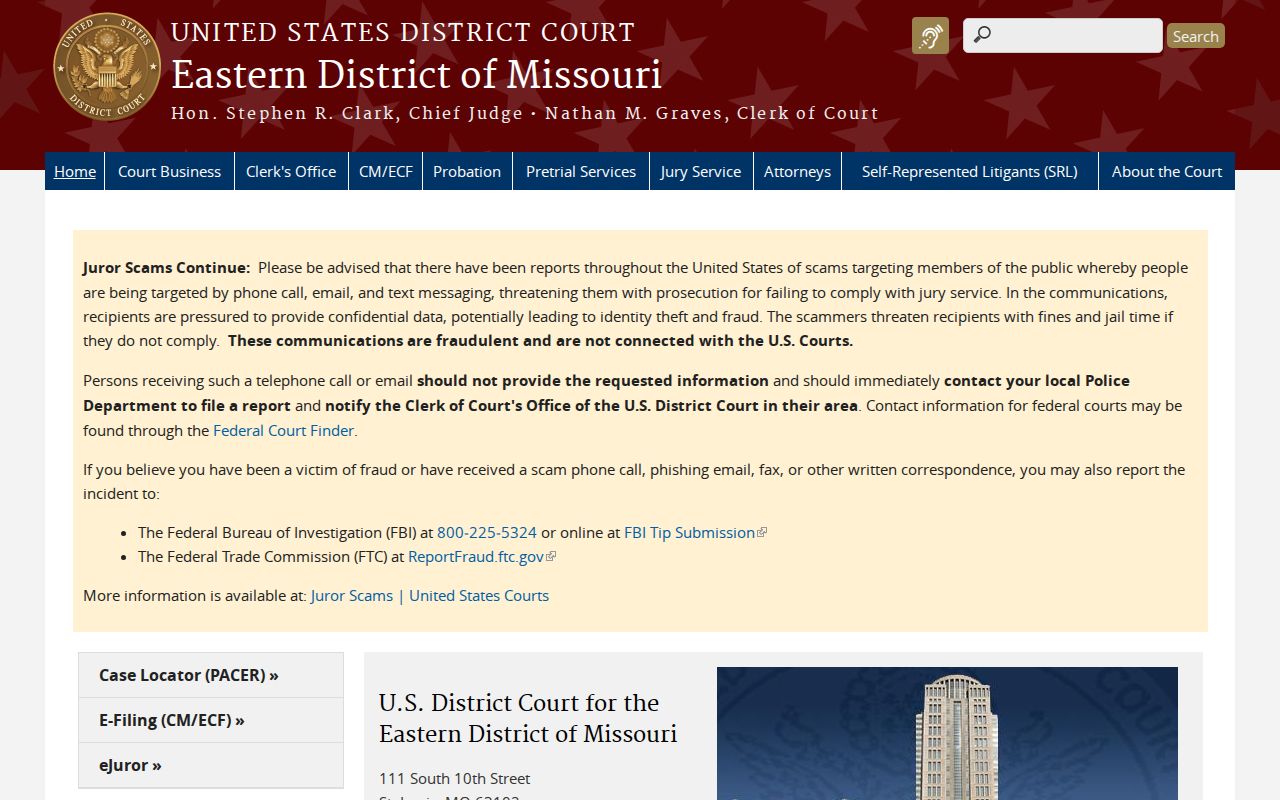
Use that court and PACER for federal filings, not the 22nd Judicial Circuit search.
For federal prison custody, use the Bureau of Prisons inmate locator.
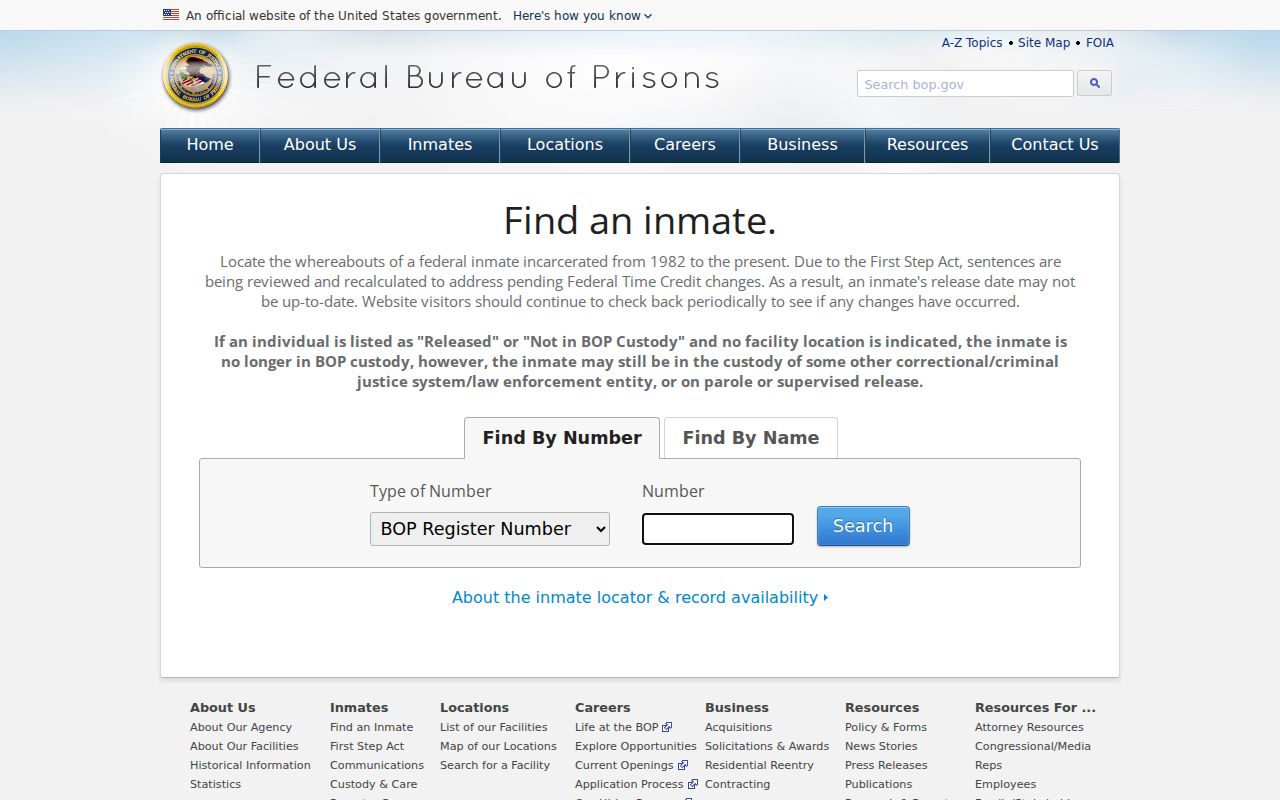
The BOP locator answers federal custody questions and does not replace City booking or Missouri supervision records.
City-by-City Criminal Records in St. Louis City
St. Louis City contains one incorporated independent city, so there is no three-city county list to build. The sole City profile follows SLMPD records, Municipal Division cases, CJC booking, and the exact 22nd Judicial Circuit selection. Surrounding municipalities belong to St. Louis County and are outside this jurisdiction. The Census estimates St. Louis at 278,144 residents as of July 1, 2025.
St. Louis Record Check
278,144 residents · SLMPD, Municipal Division, CJC, and 22nd Judicial Circuit channels
St. Louis City Historic Court Records
The Circuit Clerk reports about five million files dating from 1804 to the present and about 40,000 new civil and criminal filings each year. That long span creates a paper-to-digital divide. Case.net is valuable for current dockets, yet it cannot be treated as a complete search of two centuries of St. Louis City court history. Older files and documents without remote access may require a clerk request.
The Municipal Division moved its cases into Case.net in 2024. If a case filed before January 2, 2024 cannot be found, the City instructs the searcher to bring photo identification to the 1520 Market customer-service window or call 314-622-3231. Municourt.net is no longer the City lookup. Related-case controls can also reveal linked matters missed by a first name search.
The St. Louis Circuit Attorney represents the prosecution layer for state criminal offenses.
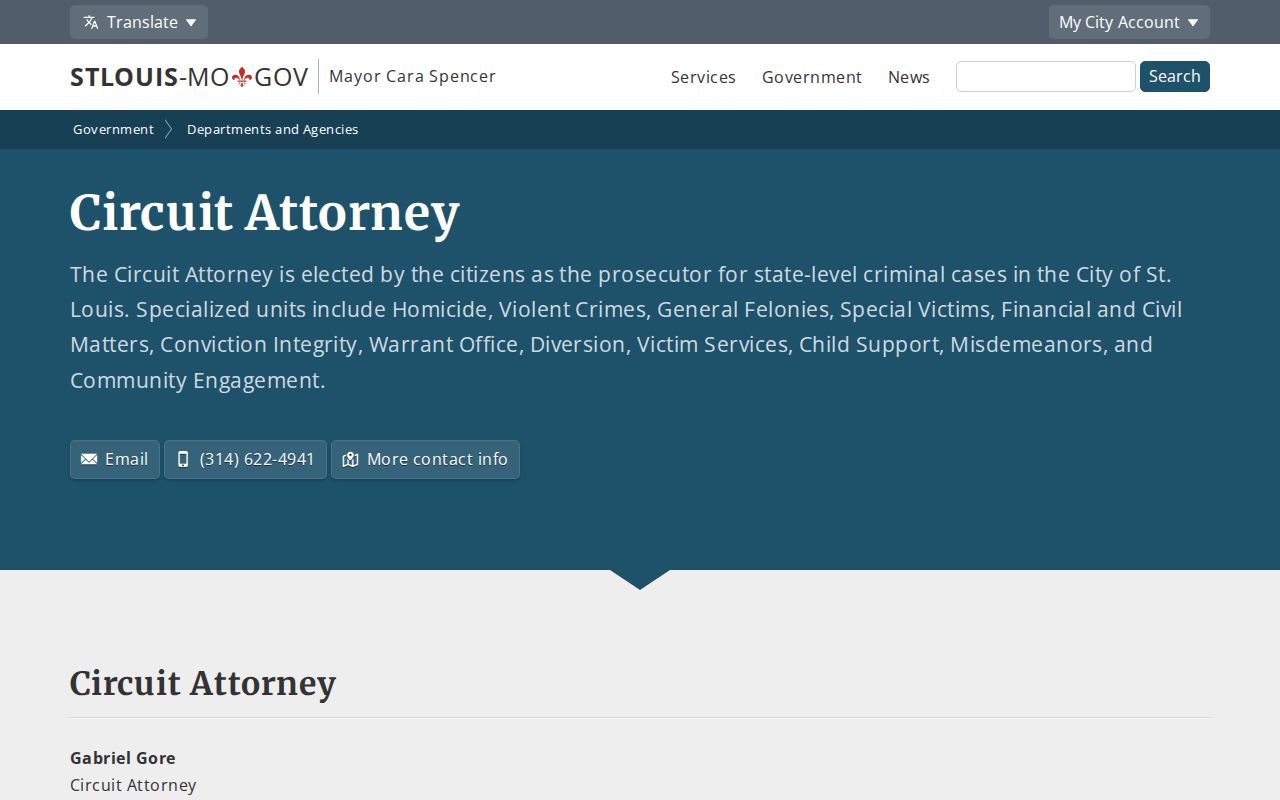
The prosecutor’s filing decision is one stage in the record chain; the Circuit Clerk and Case.net remain the sources for the resulting court file and disposition.